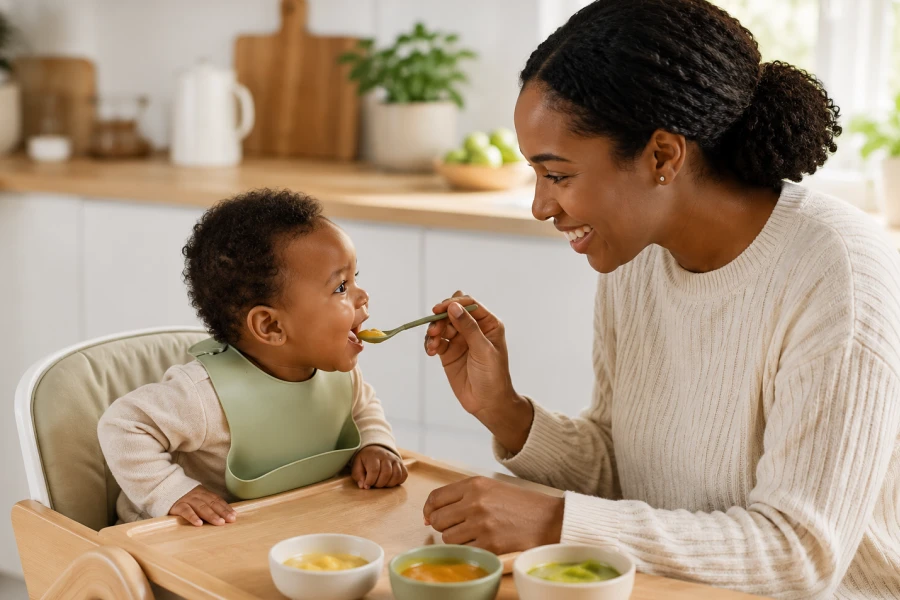
When can babies start solid foods is a question that often arrives before a baby is ready. Parents see photos, hear advice, and wonder whether a fuller-looking routine will solve sleep or fussiness. Readiness is more useful than comparison. Most babies begin exploring foods around six months, after they show developmental signals that support safer eating. Those signals matter because food is a skill, not simply a menu change. Milk feeds remain central while this new skill develops. A patient approach lets the baby participate without creating pressure. It also leaves room to discuss individual needs with the pediatrician. Planning with feeding readiness signs can make the first steps easier to understand. The best start feels steady, observed, and responsive rather than rushed.
Age provides a useful window, but behavior tells the fuller story. Look for steady head and neck control, supported sitting, interest in food, and the ability to move food back for swallowing. Reaching for your plate alone does not confirm readiness. Neither does a difficult night of sleep. Start the conversation with the clinician if your baby was born early or has feeding concerns. The goal is not to reach a milestone on a particular date. The goal is to introduce food when the body can manage it more safely. A thoughtful first foods preparation plan can turn those observations into a calmer first week. That preparation also keeps adults from offering textures before their baby can handle them. Readiness is more reliable than a date on the calendar.
Starting solids does not mean retiring bottles or nursing sessions. Early tastes and small portions complement milk feeds rather than replacing them. Babies are learning texture, flavor, and coordination one experience at a time. Expect some food to land on the chin, floor, or high-chair tray. That mess is part of learning, not evidence that the process is failing. Keep portions modest and stay close while your baby eats. Watch the baby rather than the clock when deciding when to pause. Good baby food texture ideas can help caregivers match food consistency to emerging skills. Slow progress is still progress when the experience remains safe and pleasant. That patience protects the skills that later meals require.
The first few meals do not need a dramatic rotation of ingredients. Simple, single-ingredient options make it easier to notice how your baby responds. Prepare foods until they are soft, smooth, and appropriate for the baby’s current abilities. Keep the setting calm, seated, and supervised. A tired or very hungry baby may not be ready to practice. Choose a time when an adult can stay present without multitasking. Let interest guide the pace instead of insisting on a certain amount. A realistic family meal transition can begin with a few relaxed minutes near the table. Repetition helps babies become familiar with both foods and routines. The smallest start can still build an effective routine.
Potentially allergenic foods deserve a deliberate, informed approach. Many families benefit from discussing timing and preparation with their pediatrician, especially when eczema or previous reactions are involved. Introducing foods one at a time can make patterns easier to identify. Keep the serving size and texture appropriate for the baby’s skills. Do not rely on an internet trend to make a high-stakes decision. Instead, ask what your child’s history suggests. Make notes about what was offered and how your baby responded. Resources on allergy introduction basics can help parents prepare better questions. Clear information makes a careful plan feel less intimidating. A careful pace makes it easier to notice what changes.
Early eating often looks inefficient because babies are practicing several new skills at once. They must sit, reach, bring food to the mouth, manage texture, and decide whether to swallow. That work takes time. Some days a baby may show real interest, while other days they may refuse. Both responses can be normal parts of learning. Offer the experience without turning it into a contest. Keep familiar milk feeds dependable while food skills develop. Celebrate curiosity more than quantity. Consistency matters more than a flawless menu. A calm adult presence makes the table feel safe enough for exploration.
Confidence comes from knowing what you are watching for, not from predicting every reaction. Use age as a starting point and readiness as the deciding lens. Keep questions for the pediatrician in one place. Adjust textures and timing as skills become clearer. Let meals stay short during the first stage. Avoid comparing appetite, pace, or preferences with another baby. Every child brings a different temperament and developmental rhythm. The strongest routine supports learning while respecting safety. With that foundation, the next food can feel like an invitation rather than a test. That is the kind of beginning families remember with relief.




Leave a comment